Indian Cultural Art: The Four Worlds That Define It
Walk into a serious collector's home almost anywhere in the world, and the shelves will hold figures of warriors, gods, and heroes from cultures across the planet. The work is beautiful. The pieces are heroic. Almost none of them are Indian.
This guide is for everyone who has noticed that gap, and who is starting to ask what Indian cultural art actually is, where it lives today, and how to begin collecting it.
What is Indian cultural art?
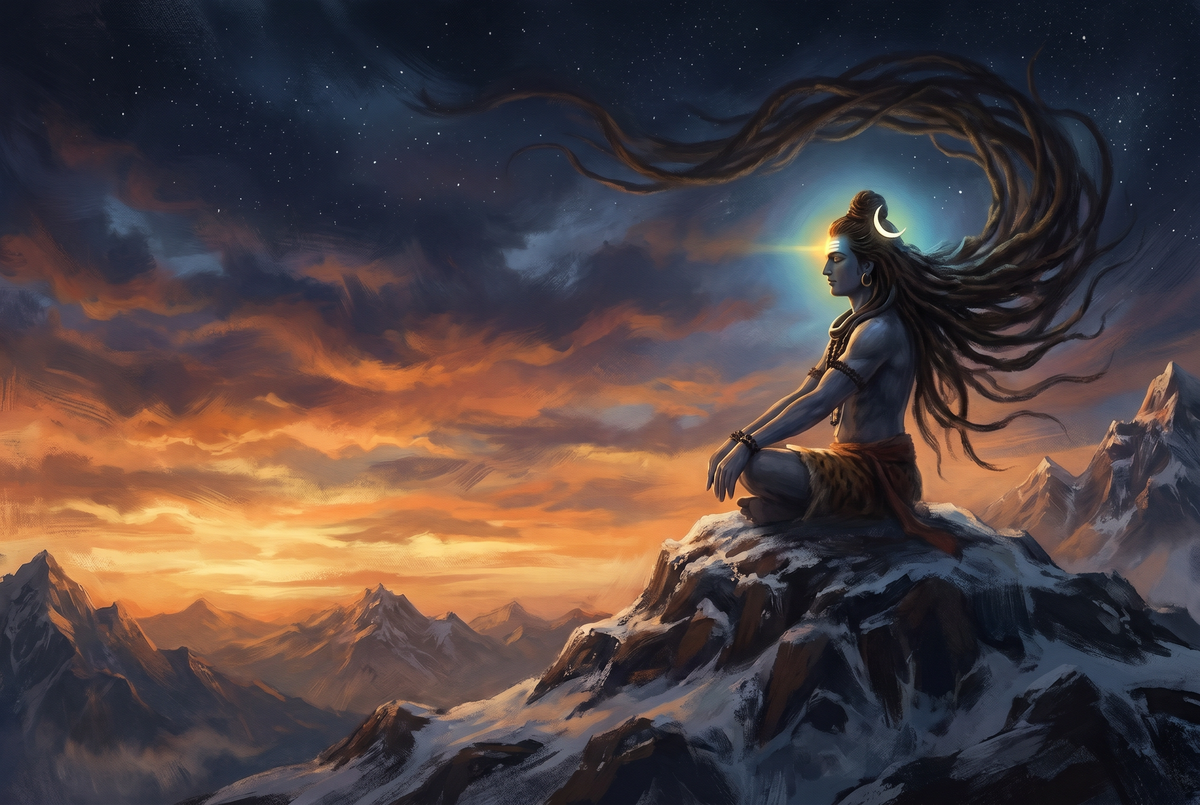
Indian cultural art is the sculpted, painted, and crafted body of work drawn from India's epics, legends, history, and cinema: the living visual heritage of a civilisation that has been telling its stories for thousands of years. It covers everything from a Chola bronze of Nataraja in the eleventh century to a contemporary studio bust of Adiyogi in 2026. It includes a Tanjore painting of Ram, a Kalamkari panel of Krishna, a sculpted portrait of Bhagat Singh, and a film-still figure of Devdas. The thread that holds it all together is not material or style; it is subject. Every piece carries a story that belongs to India.
What makes the term cultural rather than something narrower is the breadth of what it draws from. Religious sculpture is one tradition inside Indian cultural art. So is court portraiture. So is film iconography. So are the figures of warriors and reformers who never appear in temples but who shaped the land. A piece of Indian cultural art does not have to be old, does not have to be religious, and does not have to come from a temple. It has to come from an Indian story.

How is Indian cultural art different from Indian religious art?
Indian cultural art is made to remember and to honour the stories of India; Indian religious art is made for worship and prayer inside a temple or shrine. They share visual vocabulary, and they often share subject matter, but they serve different purposes. A sculpted Adiyogi by Saikou on a study desk and an Adiyogi figure consecrated for worship in a temple are not the same object, even when the sculpted form looks similar.
The distinction matters because the two traditions answer different questions. Religious art asks the viewer to pray. Cultural art asks the viewer to look again. Religious art lives in a puja room. Cultural art lives on a shelf, a console, a study desk, an office cabinet, a car dashboard. Religious art is consecrated. Cultural art is collected.
Both have a place in Indian life. They are not the same place, and the studios making serious work in this category never pretend they are.
What are the four worlds of Indian cultural art?
Indian cultural art lives across four worlds: the Hindu epics, India's legends, its history, and its cinema. Every figure that belongs in this category sits inside one of these four rooms.
Epics. The vast canvas of the Hindu epics. Shiva, Vishnu, Hanuman, Ram, Krishna, Durga, and the worlds of the Mahabharat and the Ramayan. Stories told and retold for thousands of years, alive in the homes and memories of an entire civilisation.
Legend. The figures who exist in the space between history and myth. Karna, Abhimanyu, Bheem. Heroes whose stories were too big for any single telling, and who still feel real because of how deeply they live in collective memory.
History. The real-world figures who shaped the land. Bajirao, Shivaji, Ambedkar, Vivekananda. The kings, warriors, thinkers, and reformers whose lives changed India.
Cinema. The faces, frames, and characters that defined the way India remembers itself in moving pictures. From the silent-era icons of the 1930s, to the parallel-cinema portraits of the 1970s, to the popular faces of the present, sculpted as they live in memory.
The four-worlds frame is the cleanest definition of Indian cultural art there is. It includes everything that belongs and excludes everything that does not. A figure that does not fit one of these four rooms is rarely Indian cultural art.

What is Indian heritage art?
Indian heritage art is the umbrella term for art that carries the memory of India's past, from temple sculpture to court portraiture to modern cinema iconography. It overlaps almost entirely with Indian cultural art; the difference is emphasis. Heritage points backward to inheritance. Culture points outward to the living practice. The same Adiyogi bust is heritage art because it sits inside a tradition that goes back centuries, and it is cultural art because that tradition is still alive in the homes of the people collecting it now.
For a buyer, the two terms can be used interchangeably. For a studio, the distinction matters. The serious modern studios in this category are in the cultural-art business, not the heritage-recreation business. They sculpt the stories India still tells, not only the ones it once told.
What is Hindu sculpture in the cultural-art tradition?
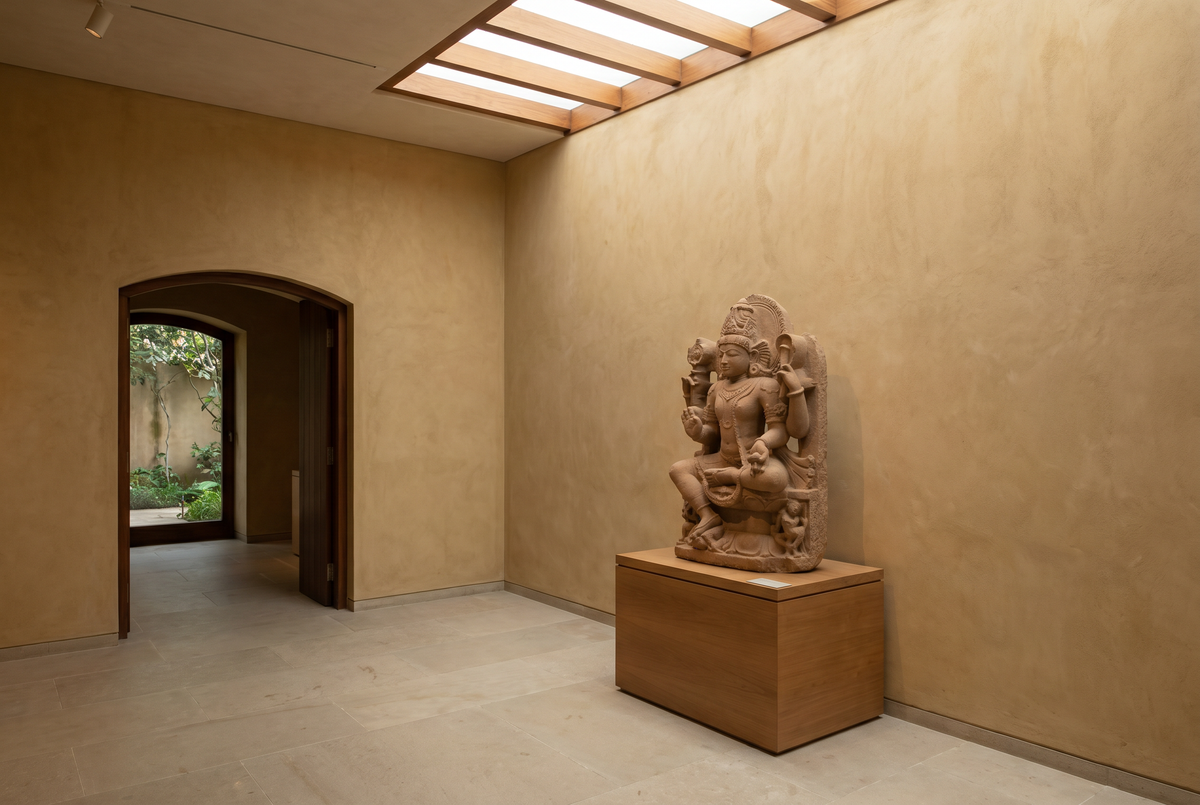
Hindu sculpture is the centuries-deep practice of sculpting figures from the Hindu epics: from the Chola bronzes of South India in the ninth to thirteenth centuries, to the Hoysala stone work in Karnataka in the eleventh to fourteenth centuries, to the contemporary studio sculpture being made for the modern home today. It is one of the great sustained sculptural traditions in world art, and it sits at the heart of Indian cultural art without exhausting it.
A studio working in this tradition today inherits a vocabulary older than most countries: the way Shiva's jata coils on the head, the way Durga's weapons are gripped across eight hands, the way Ganesha's belly rests, the way Hanuman's mace catches the light. The form-language is settled. The interpretation is where modern studios make their work. A piece sculpted today sits inside that tradition: same vocabulary, modern hand.
What is Hindu temple art, and how does it relate to cultural art?
Hindu temple art is the architectural and sculptural tradition built into India's temples over two millennia, and it sits inside the broader story of Indian cultural art without being the whole of it. The carved gopurams of Madurai. The rock-cut sculpture of Ellora. The bronze pantheons of Tanjore. The relief panels of Khajuraho. All of these are Hindu temple art, and all of them are Indian cultural art. But Indian cultural art also includes work that has never been near a temple.
Treating temple art as the whole of Indian cultural art is one of the oldest mistakes in how the West has read India. It collapses everything outside the temple, and that is most of what India makes, into the margins. Temple art is one room inside the house. The house is bigger.
Where does Indian cultural art live today?
Indian cultural art lives in modern homes, on collector shelves, in office and cafe interiors, on study desks and console tables, and increasingly in the catalogues of contemporary studios sculpting India's stories for the present generation. For most of the last fifty years, this kind of work lived mainly in museums, in temples, and in the hands of older families who inherited it. That is changing.
A new generation of Indian collectors is asking for high-craft pieces of their own culture. NRI buyers want a piece of home in their home, something that carries the weight of where they come from. Premium gift buyers want something that lasts a lifetime, not a season. Lifestyle and decor buyers want a piece that anchors a room rather than a knick-knack that fills it. Corporate gift buyers want a piece that says something real on a milestone moment.
Studios like Saikou exist to meet that demand: limited-edition pieces sculpted to a standard that respects both the story and the room the piece is going to live in.

How to start collecting Indian cultural art
Starting a collection of Indian cultural art is simpler than it sounds: pick one piece you actually want to live with, a figure from a story that matters to you, sculpted at a standard worth keeping. Most serious collectors did not begin with a plan to build a collection. They began with one piece they loved, and the second piece followed naturally a year or two later.
A few practical pointers when you are looking at a piece for the first time.
Look at the craft first. The surface, the proportions, the way the face is read, the weight of the base. A piece that does not hold up to a close look from every angle will not hold up to a decade on your shelf.
Look at the edition size. Limited editions tend to hold meaning over decades; mass-produced pieces rarely do. A piece with a fixed edition cap, numbered and certified, is in a different category from a piece reproduced indefinitely.
Look at the studio. A studio with a clear point of view treats its work as art. A workshop that takes any order treats it as a product. The difference shows in the final piece, and even more in what the piece is worth ten years from now.
Look at the story. A piece you cannot tell anyone about will not stay on your shelf for long. The figure has to mean something to you, or to someone you are gifting it to.
The Ikon Adiyogi Bust by Saikou, a starting place
For most Indian collectors entering this category, the cleanest starting place is a small premium piece from a modern studio. The Ikon Adiyogi Bust by Saikou is one such piece: a limited-edition sculpted bust of Adiyogi, the first yogi, sculpted with the form vocabulary of the classical tradition and finished by hand.
Saikou is an Indian design studio building collector-grade cultural art from the four worlds. The Ikon line is the accessible door into the studio's work, sized for desks, study corners, and shelf moments. The 3-inch version is small enough to live on a car dashboard. The 5-inch version anchors a desk or a console. Both are limited editions of 1,000 units each, numbered and certified.
The piece is not religious art. It is not a substitute for a temple figure consecrated for worship. It is cultural art: an Adiyogi sculpted as the first teacher of yoga, made to live in the rooms where modern Indians actually spend their days.

Sources
For readers who want to go deeper into the traditions referenced in this guide:
- Chola bronzes: collections at the Government Museum, Chennai; British Museum, London; Metropolitan Museum of Art, New York.
- Hoysala sculpture: the temples at Belur, Halebidu, and Somanathapura in Karnataka.
- Khajuraho relief sculpture: the temple complex at Khajuraho, Madhya Pradesh, a UNESCO World Heritage Site.
- Ellora rock-cut sculpture: the cave complex at Ellora, Maharashtra, a UNESCO World Heritage Site.
- The four-worlds frame of Indian cultural art is drawn from the Saikou brand position: epics, legend, history, and cinema as the four rooms the studio's catalogue lives across.